The Emergence of Privacy-Focused Document Editors in Online Learning Online learning is not just a different mode of delivering education; it has radically altered how students' information is managed. All information becomes digitized—homework submissions, notes, scanned documents, reports.
Although online learning offers significant advantages, it also brings a very pressing issue that few people have realized:
Who owns the information being shared and stored?
It is this realization that has been fueling an emerging trend—the emergence of privacy-oriented document editors.
It is no longer merely about creating, editing, or formatting PDFs. The focus is on ensuring data protection, minimizing risks, and empowering users to manage their files independently.
1. Why Is Privacy an Important Issue in Education?
Educational organizations process a large volume of confidential information, such as:
- Students' records
-
Academic results
-
Personal identification information
-
Behavior and attendance information
However, the value of this information is also its vulnerability.
Research suggests that educational establishments gather a huge volume of personal information, including potentially sensitive information that may harm students if mishandled. Moreover, platforms utilized in educational processes collect too much unnecessary information or share it with third parties, thus posing additional privacy threats.
2. The Pitfalls of Conventional Online Resources
Conventional online documentation resources employ the same steps:
- Upload your file.
-
Perform the processing in a remote server.
-
Retrieve the output file.
On the surface, it appears easy. However, there are dangers to it:
- Files are stored remotely on another server.
-
Data could be recorded and tracked.
-
There's no user control over the processing steps.
This practice presents danger in an academic setting where documents:
- Contain personal data
-
Have original academic content
-
Possibly institutional information
Once uploaded, that data is not under the user's control anymore.
3. What is “Privacy First”, Really?
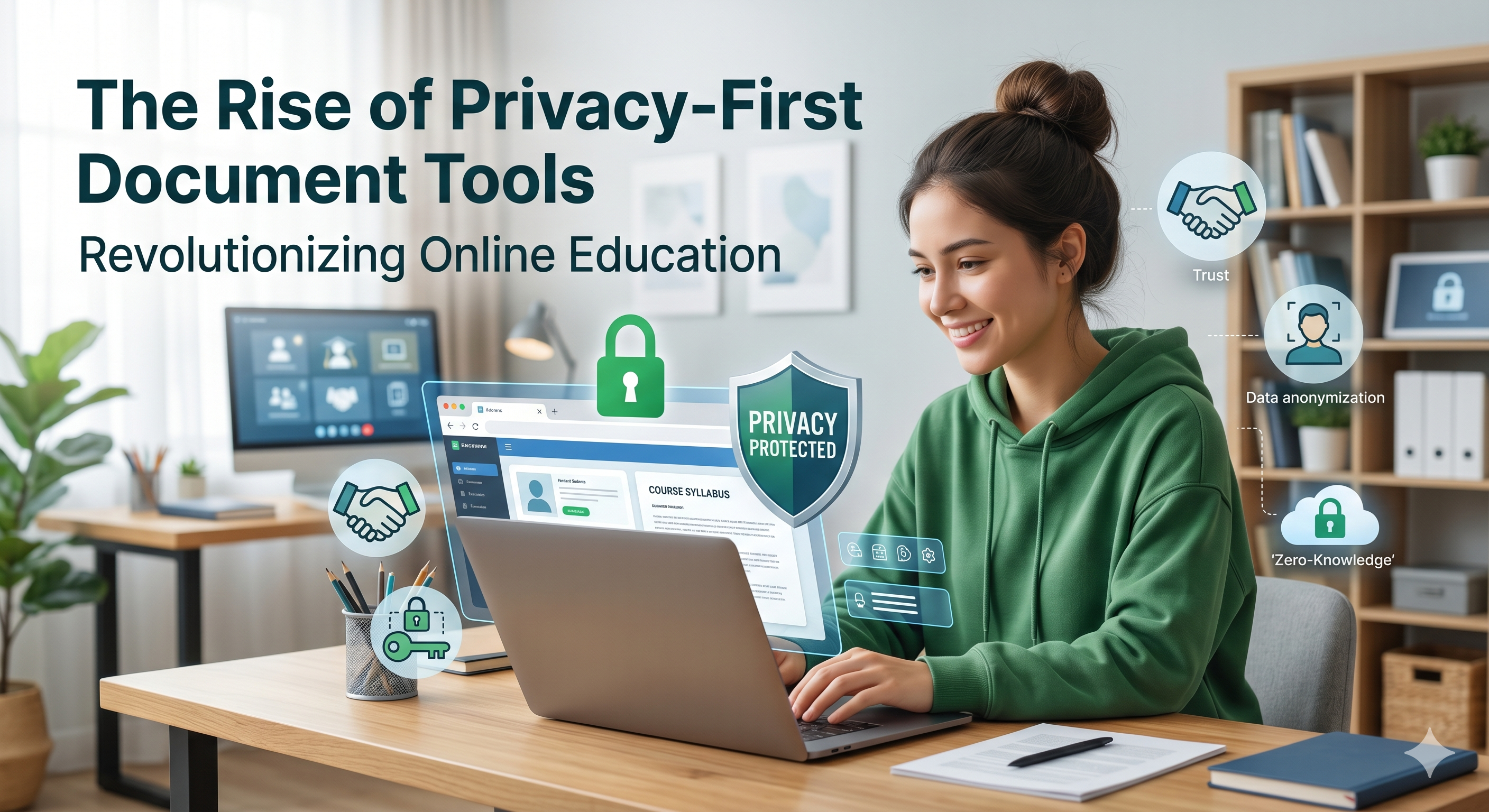
While people might think “privacy-first” is just another buzzword, that couldn’t be further from the truth.
A truly privacy-first document processor adheres to the following tenets:
Data minimization
Collect and process only what’s necessary.
Local processing
Process documents without sending them anywhere outside of the device itself.
No tracking
No tracking and no logging of anything.
Transparency
Be completely transparent with data collection and processing methods.
They are consistent with international best practices such as the GDPR, which focus on data minimization and transparency.
4. Why Students Have Started Taking Privacy Seriously ?
It turns out that students are beginning to take notice of privacy matters. Several studies have found that many university students worry about their information being used or shared on the Internet.
But here’s the twist:
Students value privacy—they just use products that don’t offer it.
Why?
- Lack of education
-
Inconvenience of secure options
-
Fewer alternatives available
This is precisely the reason for the growing popularity of privacy-oriented software.
5. Role of Browser-Based Applications in Protecting Privacy
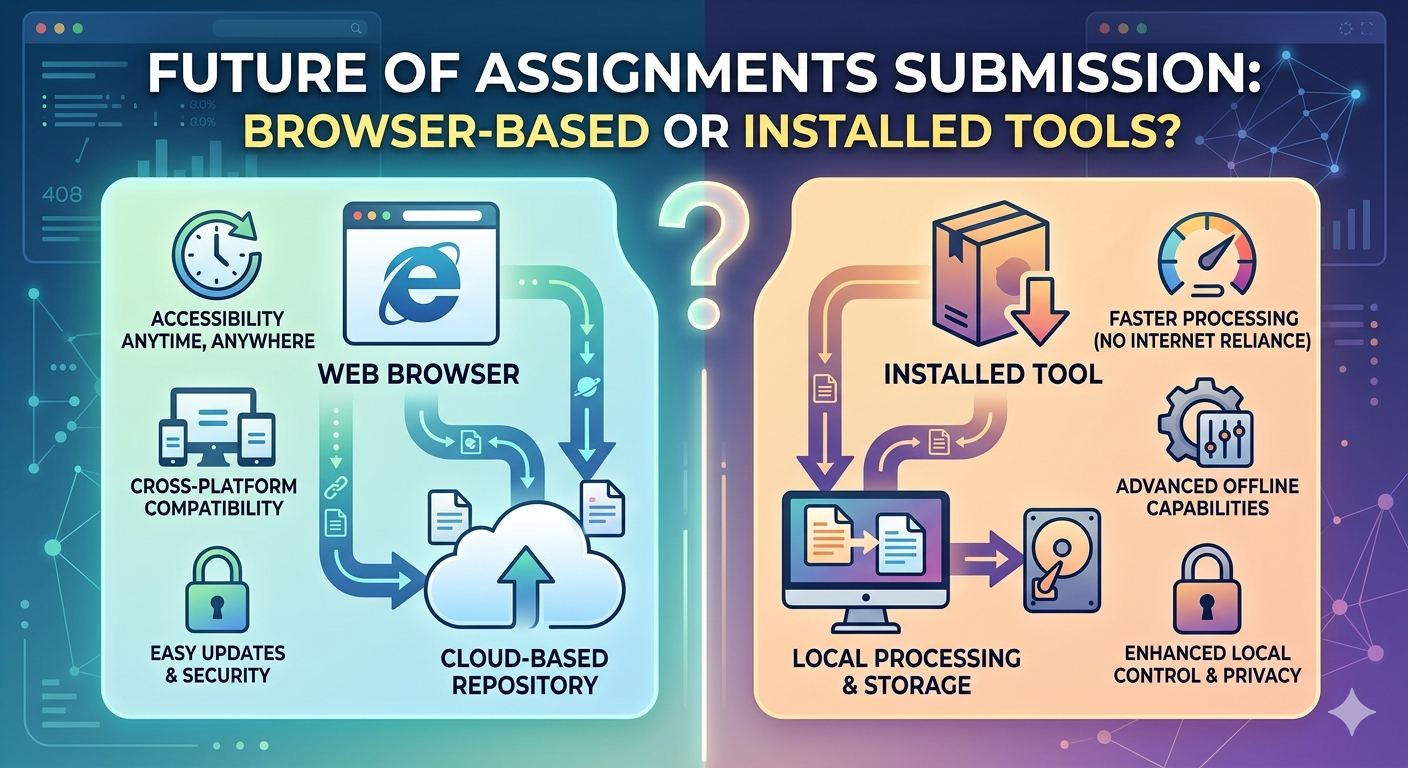
Here comes the role of browser-based applications. Modern applications such as oncepdf.com are privacy-oriented platforms that are developed considering privacy protection.
Oncepdf.com converts documents without storing files in any server but processes the document directly in your browser.
What does this mean?
- Your documents are not stored in any other device
-
There is no involvement of cloud storage
-
No other party can access your data
This is how browser-based applications help protect privacy in online learning environments.
6. Combining Privacy-First & Local Processing: A Winning Formula
Let’s dissect why that makes a difference in practice.
Old Methods:
-
Upload > Process > Download
-
Risk of data leakage
-
Performance depends on server speed
Privacy-First Methods (such as oncepdf.com):
-
Open > Process locally > Download
-
Your data stays secure
-
Efficient and secure
That’s a small change with big implications.
It changes the way we process documents from:
- Relying on the platform
- Controlling your own data
Security Threats Behind This Trend
The use of privacy-first applications is not accidental; it comes as a reaction to various security challenges.
Educational establishments become the targets of:
- Cyber-attacks
-
Data leaks
-
Unauthorized access attempts
Several sources report that digital education systems have numerous entry points, especially in cases where data is stored on several online platforms.
Even minor activities, such as:
- Submission of tasks
-
Distribution of files
-
Data storage
Can pose potential risks. Privacy-first applications minimize this threat through non-transmitting of any data.
7. “Privacy by Design” Concept
The contemporary privacy models focus on a principle called privacy by design.
This implies:
The principle of privacy is ingrained in the design and not a post hoc measure This is crucial in educational institutions.
Reasons:
- Students are minors or young adults
- Sensitive information
- Compliance issues
A privacy-by-design tool will achieve its goals by:
- Reducing data collection
- Eliminating external storage
- Limiting data processing to the local machine
Oncepdf.com is one example of a privacy-by-design tool because document processing is done locally.
8. Effects on Daily Activities as Students
We can now consider its practical use.
- Without Privacy-Focused Applications:
-
Upload files to unknown applications
-
Wait for the process to take place
-
Download the processed files
-
Pray that no data was saved
-
With Privacy-Focused Applications:
-
Launch the application in the browser
-
Process immediately
-
Download securely
Less steps. Less worries.
For students, this implies:
- Greater security when submitting assignments
-
Efficiency
-
Control over personal data
9. Privacy Plus Other Perks
Surprisingly, privacy-oriented solutions offer not only enhanced security but also usability.
Speed
Nothing to upload means faster processing.
Accessibility
Functionality available to any user who has a browser.
Simplicity
No installation needed.
Cost-effectiveness
No need for bulky software or expensive subscriptions.
Sites such as oncepdf.com incorporate all these elements into their services, thus making them applicable for academic purposes.
10. Future of Privacy-First Products?
Judging by today’s tendencies, the future seems obvious.
As education moves online:
- Data will explode
-
Privacy risks will rise
-
Regulation will tighten
The future path is clear:
Privacy-first products will become a rule, not an exception
11. Looking at the Larger Picture: Building Trust in Digital Learning
Privacy cannot be achieved merely through technology; it requires trust.
Students must trust:
- Their digital platforms
-
Their learning institutions
-
Their learning tools
Without trust, the foundations of digital learning crumble.
Privacy-centered tools can build trust once again by:
- Putting power back into the hands of students
-
Limiting excessive data exposure
-
Ensuring transparency
Conclusion
Privacy-centric documents are not a new trend but a response to an actual problem. The need for privacy increases as more people engage in online education. Existing platforms designed for convenience no longer suffice. Now, the demand for secure, efficient, and transparent document handling platforms is at an all-time high. This is demonstrated by oncepdf.com, a document management site that offers convenience and efficiency while maintaining privacy. Such platforms are likely to become increasingly popular as more people realize their importance.