The Unseen Transformation That Went Undetected
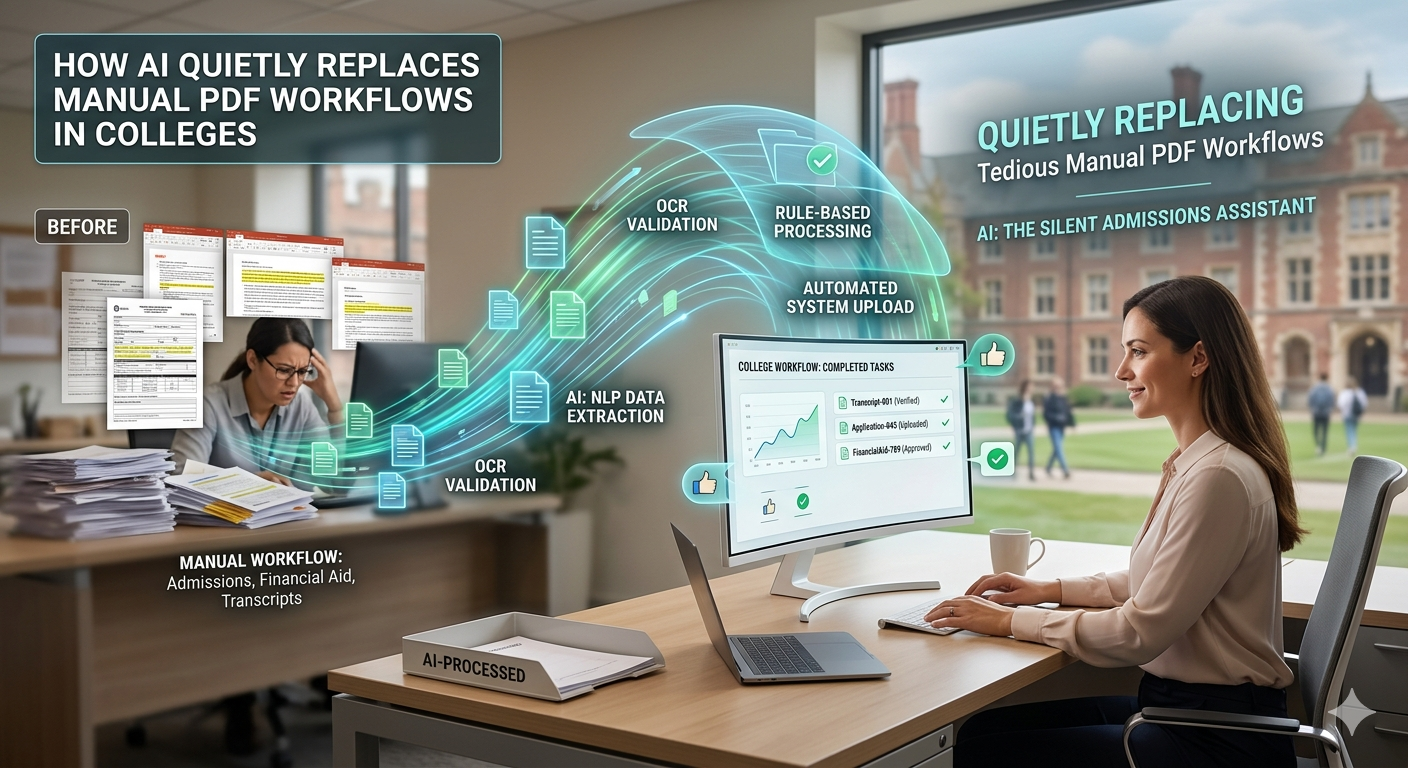
There is a transformation happening that is so subtle that most have not even detected it yet. For a long time, the default process was always the same; upload your document, let the system work its magic behind closed doors at a remote server somewhere, and get the result. It seemed like a sensible thing to do, and no one gave it a second thought. However, lately, there seems to be a small change in mentality among consumers. They find themselves thinking for a brief moment about what really happens to their document once it gets uploaded.
From Convenience to Awareness
At first, convenience was all there was. Users of any level of experience were happy with getting things done fast, without caring about what happened to the information once it reached its destination. However, gradually awareness became more common among users. Information regarding breaches of data security, privacy concerns, and an increased online presence made them think twice before using certain apps or programs, even though they did not understand all of the nuances involved in data security issues.
This newfound awareness made people more critical. They began to favor certain tools over others, choosing those that offer better control even when that difference is not visible at first sight.
“Privacy-First”: What It Truly Entails
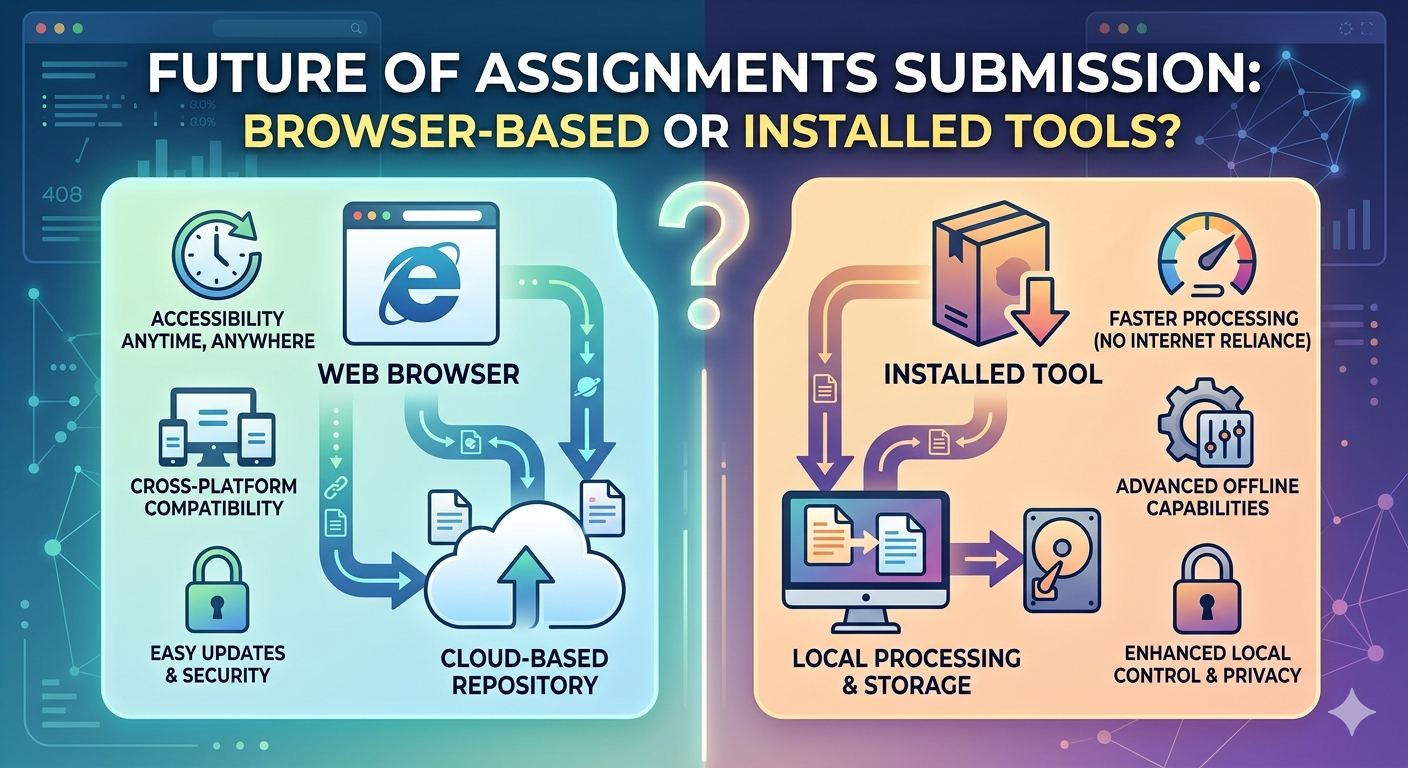
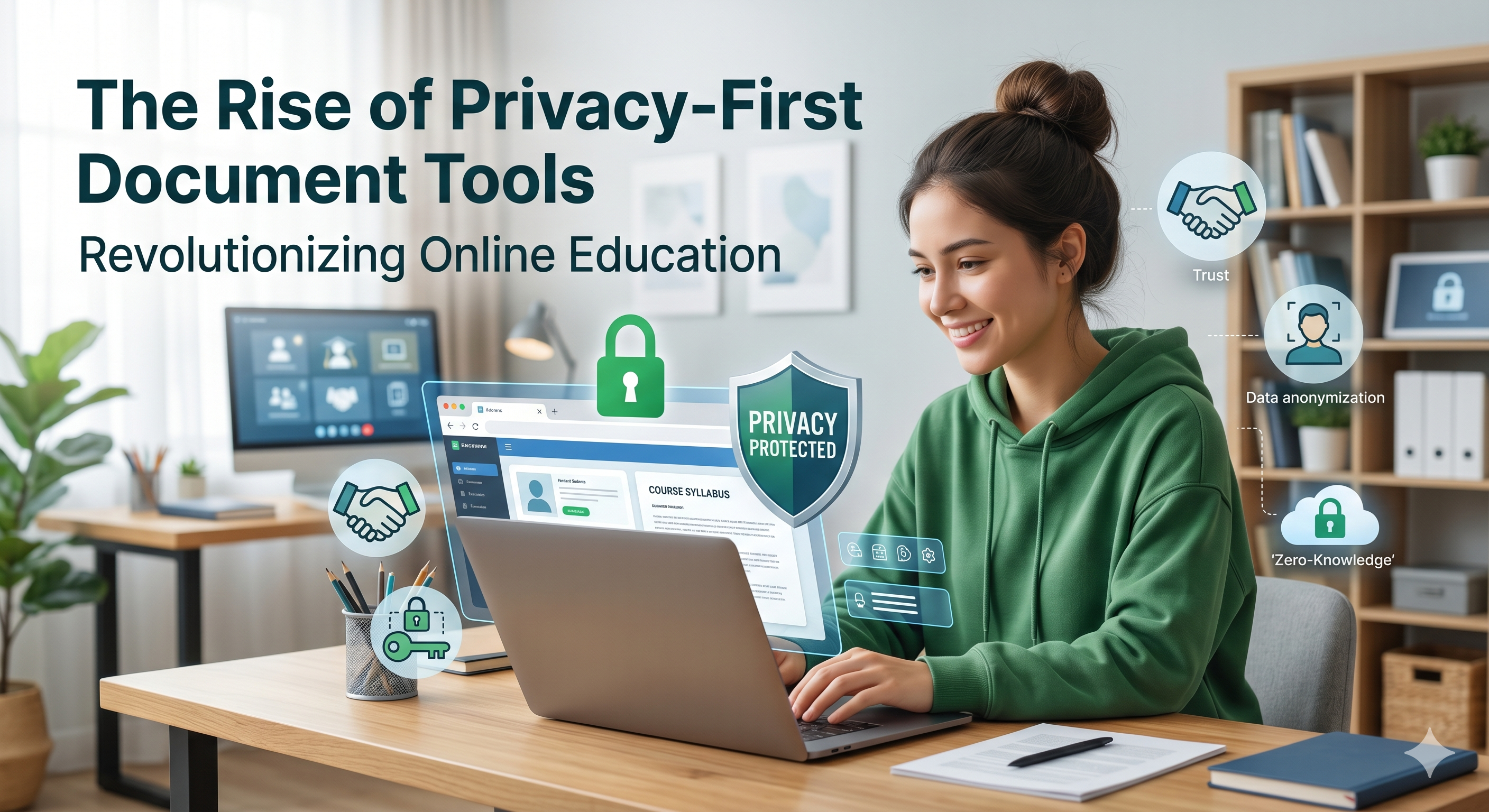
There are many misconceptions surrounding what privacy-first truly entails. It is not limited to adding a privacy policy and encrypting information during transmission only. Privacy-first designs reduce the need for the transfer of information to begin with. Instead of uploading documents into a third-party server, this type of technology does everything on your end. Documents are processed either using the installed software or the browser itself.
The site oncepdf.com is a great example of the privacy-first strategy at work, where people can edit, convert, and manipulate their PDF documents without ever having to upload them online. In other words, documents remain on your computer, and all processes are conducted locally. It might seem like a simple difference, but it makes all the difference in terms of trustworthiness.
Problems with Cloud Solutions
Cloud solutions do not necessarily pose problems in their essence. They provide fast and efficient services and offer all kinds of convenient functions. Yet, they add an additional element of ambiguity. The user never knows exactly what happens when he or she uploads a file – which server it will be stored on, for how long, and who exactly may access it. Although the system may state that the file is deleted after being processed, there is no guarantee for that to happen.
It does not imply that all cloud solutions are untrustworthy, but there is always the aspect of safety, especially given that users are becoming increasingly conscious about it.
Why Local Processing Turns Everything Upside Down
With local processing, the problem disappears since there will be no upload of files. If nothing is going out from your gadget, then most problems cannot happen. Since there will be no server where data can be stored or transferred, security becomes easier to guarantee.
Sites like oncepdf.com are now taking advantage of advances in web browsers that allow you to run tasks on your device rather than having to install any software. The process is faster and more efficient than ever before.
Efficiency Not a Compromise for Privacy
A common misconception about privacy-related technologies is that they are inefficient or slower. The truth is that this isn’t always the case. There’s usually time spent on uploading files, particularly when these are big and even if there is a poor internet connection. Skipping this step will make the process more efficient.
Advantages of local processing include:
- Reduced upload time
-
Server reaction
-
Downloading time
In other words, the whole process becomes almost instantaneous. Services like oncepdf.com provide users with a combination of efficiency and security. It is important since people don’t tend to use tools that are perceived as slower than usual
The Psychological Component: Being In Control of One’s Data
In addition to all the technological considerations described above, there is also the question of the psychology behind this switch. It is psychologically reassuring for users to be aware that their data stays on their machine. Regardless of whether they completely understand the mechanism of operation of the tool, the concept of keeping one’s data “local” makes them feel in control.
It is essential in making people use new technologies. They do not just need functional tools; they want reliable tools.
The Influence of Students and Regular Users
It is worth noting that students represent one of the key catalysts of the change. Each day, they work with several PDFs, such as assignments, notes, scans, and submissions. The majority of these PDFs have sensitive or academic data.
Until recently, students were not selective with the applications used for working with files. Now, however, they have started to pay attention to:
- Security
-
Privacy
-
Consistency
Web-based services like oncepdf.com are an ideal solution for them, as they provide convenience, do not require installations, and minimize risks.
End of Cloud? No, Just a Shift in Default Behavior
Let’s be honest: cloud applications are here to stay. But they’re still vital for:
- Working together
-
Sharing files
-
Workflow management
The shift that’s coming, however, is in default behavior.
Previously:
Uploads were default
Moving forward:
Uploads will require intentional action
Questions from users will become:
"Do I really need to upload this file?" And if the answer is no, local tools win out.
Privacy Advantage: The Competitive Edge
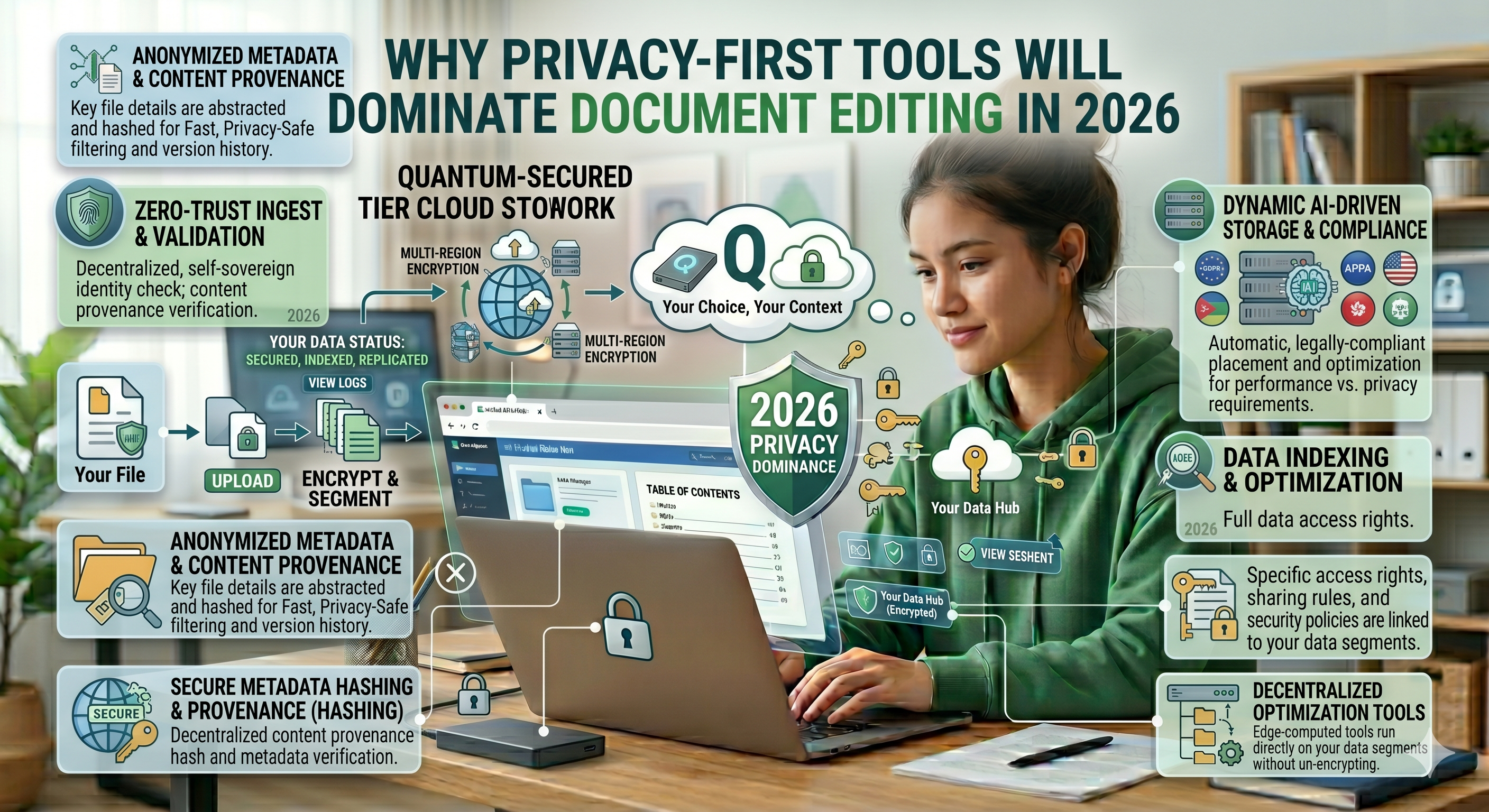
With regard to privacy, by 2026, it won’t be enough to just have privacy. Platforms which value data privacy will become a differentiator. Customers will be weighing platforms not only in terms of functionality but also data handling.
Here is where we see a shift in the nature of competition:
- It’s no longer about speed
-
It’s no longer about cost-effectiveness
-
It’s about trustworthiness
Oncepdf.com has already positioned itself according to this trend, ensuring privacy and ease-of-use go hand-in-hand
Document Editing in the Future
In the future, privacy-centric applications will not suddenly emerge; rather, it will take time, as it will result from:
- Greater user awareness
-
Improved technology
-
New user expectations
The alternative approach may eventually be seen as the normative way forward. For instance, the current practice of uploading confidential documents without consideration to unknown servers may seem outdated soon.
Conclusion
The future of document editing software is much more than a matter of features; it is an issue of power. People have started understanding that there is no need to sacrifice their privacy for the sake of convenience, and this understanding is changing the way we design these applications.
Oncepdf.com is one example of such an application which allows you to benefit from its fast and user-friendly features without sacrificing your security. In the future, privacy-first tools will dominate simply because they do the job better.
It is expected that by 2026, privacy-first applications will no longer be exceptional, but they will be the norm.