# Why More People Are Editing PDFs Online Instead of Installing Desktop Software
Three years ago, a small accounting firm spent nearly a week upgrading PDF software across twenty-seven office computers.
The actual PDF editing work took less than three hours.
The installation process took days.
License activation issues appeared on older machines. Two employees couldn't access their software because activation limits had been reached. One laptop required a complete reinstall after a failed update. Meanwhile, clients kept sending documents that needed signatures, revisions, and approvals.
The managing partner eventually asked a question I've heard repeatedly over the past few years:
**"Why are we still installing software just to edit a PDF?"**
That question sounds simple. It isn't.
I've reviewed enough digital workflow projects to notice a pattern. The conversation is rarely about PDFs. It's usually about friction.
Most people don't wake up wanting PDF software.
They want to fix a typo.
Merge two files.
Sign a contract.
Submit a government form.
Send an invoice.
The PDF is simply standing in the way.
For years, desktop software was the accepted solution. If you needed serious PDF editing, you downloaded a large application, installed updates, managed licenses, and hoped every employee was using the same version.
On paper, that sounds reasonable.
Reality tends to look different.
The uncomfortable reality is that most users touch PDF editing tools for only a few minutes at a time. They aren't designers spending eight hours inside professional software. They aren't publishing teams producing thousands of pages. They're ordinary people trying to complete a task and move on.
That's where online editing began changing the market.
Not because it was technically superior.
Because it removed steps.
And removing steps is often more valuable than adding features.
I remember watching a procurement discussion inside a mid-sized organization. The IT department was comparing software capabilities. Security, compatibility, deployment requirements, maintenance schedules. The usual checklist.
Meanwhile, the employees who actually used PDFs had a different concern.
They wanted something that worked immediately.
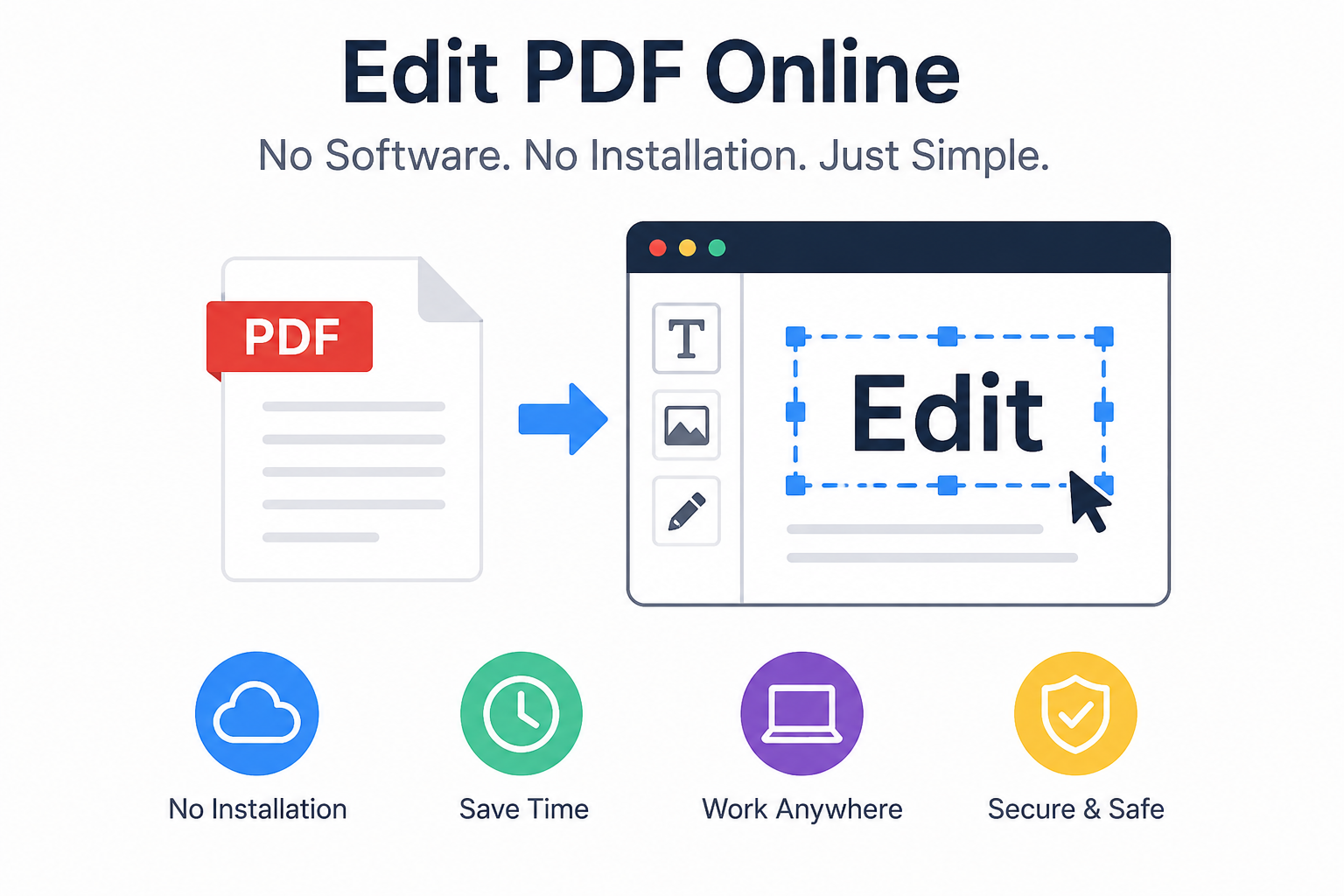
No installation.
No admin permissions.
No support tickets.
No waiting.
That disconnect appears more often than vendors would like to admit.
Many software purchasing decisions still focus on feature lists. Users focus on effort.
Those are not the same thing.
**Convenience quietly became the biggest feature in the PDF market.**
Most marketing campaigns talk about editing tools, OCR engines, annotation systems, form creation, and collaboration features.
What vendors rarely mention is that convenience often wins before any feature comparison even begins.
If someone receives a PDF and can edit it online within thirty seconds, the evaluation process is effectively over.
The battle wasn't won through functionality.
It was won through accessibility.
This is where things become complicated.
Desktop software isn't disappearing because it's bad.
Far from it.
Professional publishing environments still rely heavily on installed applications. Legal departments handling sensitive files often prefer local processing. Engineering firms frequently maintain internal document workflows that never touch public cloud services.
Yet those users represent a smaller percentage of the overall market than many people assume.
The average user isn't performing advanced document production.
They're performing document maintenance.
That's a very different job.
And document maintenance doesn't always justify installing software.
A lot of people underestimate how much workplace behavior changed after remote work became normal.
When teams began working from home, documents stopped living on office computers.
They started living everywhere.
Cloud drives.
Email threads.
Project management platforms.
Client portals.
Mobile devices.
Suddenly the desktop became just one access point among many.
PDF editing followed the documents.
That wasn't a technology trend.
It was simple human behavior.
People naturally prefer working where their files already exist.
Moving files between systems introduces delays, confusion, and mistakes. I've seen employees download a document, edit it locally, upload the wrong version, then spend half a day figuring out which file was actually final.
Nobody advertises that cost.
But organizations pay it constantly.
The irony is hard to ignore.
For years, software companies competed by adding more capabilities.
Meanwhile, users increasingly rewarded products that removed complexity.
Sometimes less functionality creates a better experience.
That statement makes product managers uncomfortable.
Still true.
What happens after processing?
Those questions matter.
But here's something interesting I've observed during security audits.
Many organizations spend enormous energy worrying about cloud PDF tools while continuing to exchange sensitive documents through unsecured email chains.
Risk perception doesn't always match actual risk.
The discussion is usually more nuanced than marketing materials suggest.
Neither side is completely right.
Neither side is completely wrong.
The decision often depends on operational realities rather than ideology.
A small business owner handling invoices faces a different risk profile than a multinational legal department reviewing merger documents.
Context changes everything.
From a technical perspective, online PDF systems have also improved dramatically.
A decade ago, browser-based editing felt limited.
Slow.
Unreliable.
Occasionally painful.
Modern web technologies changed that equation.
Browsers now handle document rendering, annotation, layer management, form processing, and collaboration tasks that previously demanded installed applications.
Think about what actually happens.
The browser isn't merely displaying a file anymore.
It's functioning as a lightweight software platform.
Most users never notice this transformation.
They simply notice that the document opens and works.
And honestly, that's exactly how technology adoption tends to happen.
People don't celebrate infrastructure improvements.
They celebrate fewer headaches.
Another factor rarely discussed is device diversity.
A desktop application assumes a desktop.
Life doesn't.
Someone reviews a contract on a laptop at breakfast.
Signs it from a phone during a commute.
Shares it from a tablet later in the day.
That workflow would've sounded messy years ago.
Today it's normal.
The PDF ecosystem adapted because users changed first.
Technology followed.
Not the other way around.
I've spoken with enough business owners to notice another pattern.
Very few people enjoy managing software.
They tolerate it when necessary.
Software updates, license renewals, compatibility checks, deployment policies, version conflicts. None of these activities create business value on their own.
They're maintenance tasks.
Necessary perhaps.
Exciting never.
Online editing shifts much of that burden away from the user.
Updates happen in the background.
Features appear automatically.
Compatibility issues become less visible.
The user focuses on the document rather than the tool.
That sounds obvious.
Yet entire software categories are being reshaped by this principle.
The PDF market is simply one of the most visible examples.
There is also a generational component that doesn't receive enough attention.
Many younger professionals grew up expecting services rather than installations.
They stream media instead of downloading it.
Use cloud storage instead of external drives.
Access software through browsers instead of local executables.
For them, installing software often feels like an exception rather than the default behavior.
That expectation changes product adoption patterns in ways traditional vendors sometimes underestimate.
And that's where the larger market tension appears.
Desktop PDF software isn't losing because it suddenly became ineffective.