AI Integration in PDF
Benefits That Are Transforming Document Management
The complaint sounded familiar. A procurement manager had spent six months digitizing thousands of vendor agreements. Everything looked organized on paper. The PDFs were neatly stored. Naming conventions were documented. Teams were trained. Then someone asked a simple question.
The documents existed. The information existed. The company owned everything it needed. Nobody could find the answer without opening hundreds of files manually. I've watched versions of this scenario play out more times than I can count. Organizations often assume document management problems disappear once paper becomes PDF. Reality tends to be much messier.
The uncomfortable truth is that traditional PDF systems solved storage problems long before they solved information problems. That's where AI starts changing the conversation. Not because artificial intelligence is magical. It isn't. Because most organizations are drowning in documents while starving for usable information.
The Real Value Isn't Automation
Most marketing teams focus on automation. They shouldn't. What I've noticed after reviewing document workflows across different industries is that the biggest bottleneck isn't usually document creation. It's document retrieval.
A company may have ten thousand PDFs. Finding one file is easy. Finding one sentence buried inside ten thousand files is where costs start climbing. Think about insurance claims. Think about legal contracts. Think about government applications. Think about engineering reports stored over a decade. The information exists. Employees simply can't access it efficiently.
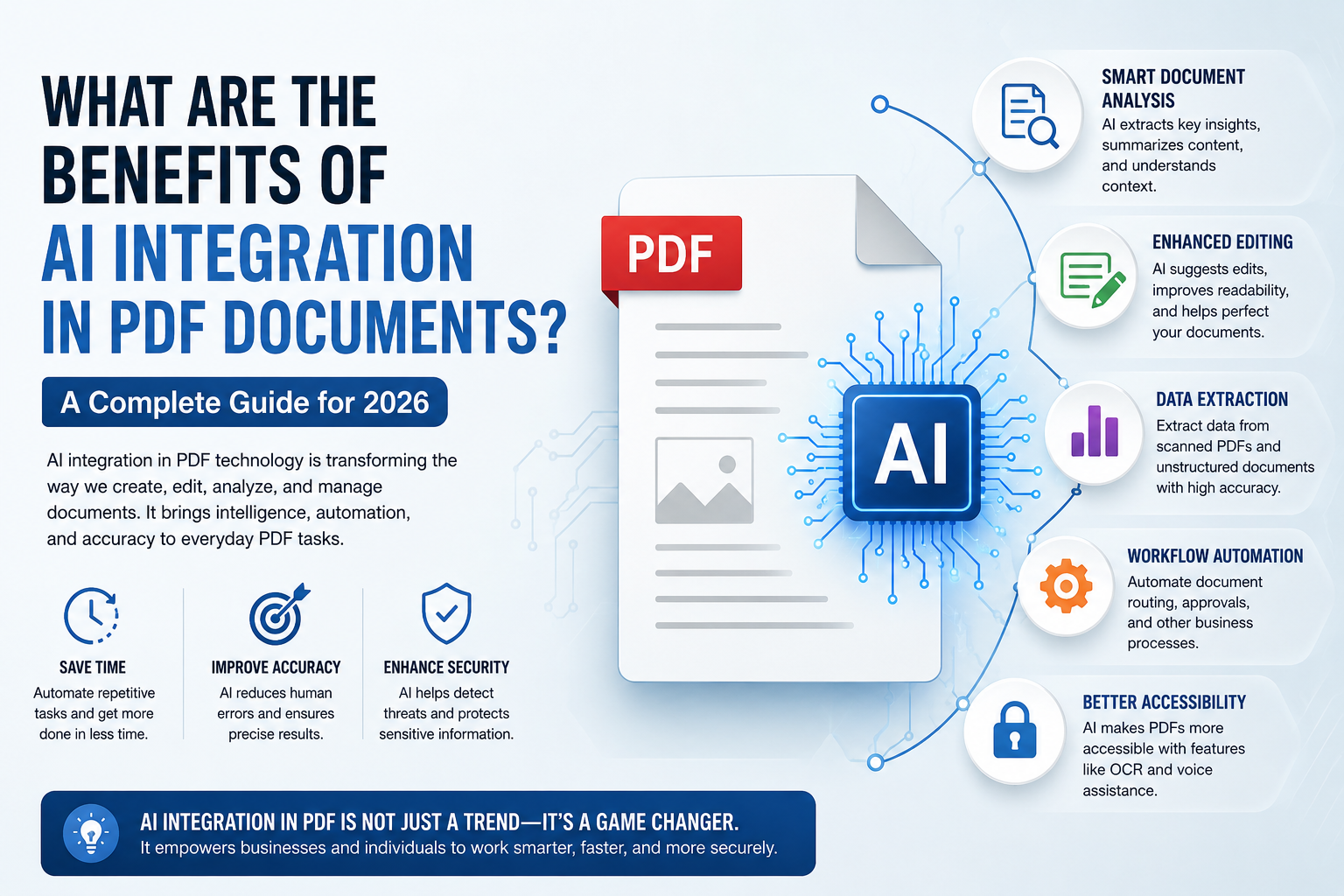
AI-powered PDF systems are beginning to treat documents less like static files and more like searchable knowledge repositories. That distinction sounds small until someone spends three days searching for information that should take thirty seconds to locate.
Most executives discover this too late. The labor cost of searching often exceeds the cost of storing. Nobody budgets for that.
Why Traditional Search Was Never Enough?
On paper, keyword search seems reasonable.
Type a word,
- Get results
- Problem solved
Except people don't think in keywords. A project manager may search for "vendor delay penalties." The contract might contain the phrase "supplier performance deductions."
A traditional PDF search sees different words. An AI system sees related meaning. That difference sounds technical. It quickly becomes financial.
I recently reviewed a case involving compliance documentation spread across hundreds of PDFs. Staff members knew required information existed somewhere inside the archive. They just couldn't consistently locate it. The irony is hard to ignore.
Companies invest millions generating documentation and then struggle extracting value from their own information. AI isn't fixing every problem here. But semantic search is solving a surprisingly expensive one. Hidden Benefits Nobody Talks About .Everyone talks about productivity.
Few people talk about cognitive fatigue. Ask someone who reviews contracts for eight hours per day. Ask an auditor reading policy documents.
Ask a compliance officer investigating procedural changes. The mental exhaustion isn't caused by complexity alone. It's caused by repetition.
Page after page
Clause after clause
Version after version
Humans are remarkably good at judgment. We're much less impressive at endlessly scanning nearly identical documents looking for tiny differences. This is where AI becomes practical rather than impressive. Instead of replacing expertise, it removes repetitive document hunting.
That's a very different value proposition. And frankly, a much more believable one. Document Summaries Are Changing Executive Behavior Something interesting happens when information becomes easier to consume. People actually read it.
I've seen board members ignore eighty-page reports for years. Then AI-generated summaries appear. Suddenly engagement increases.
Questions improve
Decision quality improves
The documents didn't become smarter. Accessibility improved. There's a lesson hidden inside that observation. Many organizational problems aren't information shortages. They're attention shortages. Executives rarely lack data. They lack time. AI-powered PDF summarization is quietly becoming an attention management tool disguised as a document feature. That sounds less exciting than artificial intelligence. It's probably more valuable.
The Compliance Angle Is Bigger Than Most People Realize
Compliance departments rarely generate headlines. They generate paperwork. A lot of paperwork. Healthcare organizations, financial institutions, government contractors, manufacturing firms. Different industries. Same challenge. Documentation volume expands faster than review capacity. This creates an incentive nobody talks about. Organizations often prioritize documentation creation over documentation understanding.
The file exists. The checkbox gets marked. Everyone moves on. Then an audit arrives. That's where things become complicated.
Does that eliminate compliance risk?
Of course not. But reducing review friction changes behavior. People review more when reviewing becomes easier. Human nature hasn't changed. The economics of effort have.
PDFs Are Becoming Data Sources
Most users still think of PDFs as digital paper. That mindset is becoming outdated. A modern AI-enabled PDF can function more like a database than a document. Customer records. Purchase histories. They're all trapped inside files.
Historically, extracting this information required specialized software, consultants, or significant manual labor.
Now?
A user can increasingly ask questions in plain language. The PDF responds. That shift sounds subtle.
It isn't. We're moving from document retrieval toward document interaction. That's a completely different category of workflow. The Technical Reality Behind AI PDF Systems. Here's where vendors sometimes oversimplify things. AI doesn't magically understand every document. Bad scans remain problematic. Poor formatting creates confusion. Low-quality source files introduce errors. Garbage in still produces garbage out. That hasn't changed.
What has changed is the system's ability to interpret context
Imagine a PDF as a giant warehouse. Traditional search walks aisle by aisle looking for exact labels. AI systems build a mental map of the warehouse.
Not perfect
Not flawless
But dramatically more useful. I've reviewed enough document platforms to notice a pattern. Organizations expecting perfection become disappointed. Organizations expecting acceleration become impressed. Expectation management matters.
Why 2026 Feels Different
The PDF market has seen plenty of hype cycles. Most disappeared. This one feels different for a practical reason. The technology is finally addressing everyday frustrations rather than futuristic fantasies. Nobody wakes up wanting artificial intelligence. People want answers. People want faster approvals. People want fewer manual reviews. People want less document chaos. That's it. The companies gaining traction understand this. They're not selling AI. They're selling reduced friction.
Big difference. What Users Still Underestimate Many users assume AI's biggest contribution is speed. I disagree. The larger impact may be consistency.
1. Humans get tired
2. Humans overlook details
3. Humans interpret information differently depending on stress, workload, and deadlines
A system that consistently identifies relevant sections across thousands of PDFs can create a level of operational reliability that many organizations struggle to achieve manually.
That doesn't eliminate human review. It improves where human attention gets applied. The distinction matters. Experts should spend time evaluating decisions. Not hunting for page numbers. The Challenge Nobody Has Solved Yet Despite the excitement, a difficult tension remains.
As organizations become more dependent on AI-assisted document management, they also become more vulnerable to subtle inaccuracies that users may not immediately notice. That's the paradox.
The better AI becomes at sounding confident, the more important verification becomes.
Most people focus on what AI can find inside a PDF. The harder question is whether future organizations will maintain enough institutional knowledge to recognize when the system quietly gets something wrong.
And that question may end up shaping the next decade of document management far more than any feature announcement ever will.