# How to Earn Money by Creating and Selling PDFs in 2026
A few months ago, I was reviewing a small creator business that was pulling in more than many local retail shops. No employees. No warehouse. No shipping headaches. Just PDFs.
At first glance, that sounds ridiculous.
Most people hear the word PDF and immediately think of tax forms, instruction manuals, or boring corporate documents. They don't think about income. They certainly don't think about building an entire digital business around something that has existed for decades.
Yet that's exactly what's happening.
The interesting part isn't that people are selling PDFs. The interesting part is why buyers keep paying for them when video platforms, AI tools, and free content seem to be everywhere.
I've spent enough time studying digital product businesses to notice a pattern. The creators making money from PDFs aren't necessarily experts. They aren't always influencers. Many don't have huge audiences.
What they understand is friction.
People don't buy information.
They buy shortcuts.
That's where the story changes.
A person searching for "how to start a home bakery" doesn't always want a twenty-minute video. They don't want thirty blog posts either. Sometimes they want a practical document that tells them exactly what to do next.
A PDF can do that surprisingly well.
And in 2026, that simple reality is creating opportunities that many creators still underestimate.
## The Mistake Most New PDF Sellers Make
When people first enter this market, they usually focus on what they want to create.
That's backward.
The better question is what people are already struggling with.
There's a huge difference.
That can be frustrating.
A designer spends thirty hours creating something visually impressive. Another creator spends three hours making a practical document and earns more.
Reality isn't always fair.
Buyers rarely reward effort.
They reward usefulness.
The uncomfortable reality is that many PDFs fail because they solve problems nobody urgently cares about.
A fitness tracker designed for busy parents.
A wedding planning spreadsheet.
A GST filing guide for small businesses.
A contractor pricing template.
Those products don't succeed because they're PDFs.
They succeed because they remove confusion.
That's what customers actually pay for.
## Why AI Hasn't Killed the PDF Business
This is where things become complicated.
A lot of people assumed AI would destroy digital product markets.
On paper, that sounds reasonable.
If AI can generate information instantly, why would anyone purchase a PDF?
Because information was never the product.
Organization is the product.
Structure is the product.
Decision-making is the product.
I've seen business owners spend hours asking AI questions that eventually produce a messy collection of answers. Then they'll happily spend money on a PDF that organizes everything into a usable system.
That sounds irrational.
Yet it happens constantly.
A well-designed budgeting workbook can outperform hundreds of pages of scattered advice.
A startup launch checklist can save more time than dozens of AI conversations.
People often underestimate how valuable clarity becomes when they're overwhelmed.
The irony is hard to ignore.
The very technologies that generate unlimited information are making curated information more valuable.
## The PDFs Actually Making Money in 2026
Some categories keep appearing again and again.
Not because they're trendy.
Because they solve expensive problems.
Business templates remain one of the strongest categories I've observed.
Invoice systems.
Client onboarding packs.
Proposal frameworks.
Operational checklists.
These products save time.
Time has always been expensive.
Health and wellness PDFs continue selling too, although many creators misunderstand why. Buyers aren't paying for generic advice they can find online.
They're paying for structure.
A meal planner that eliminates daily decisions often performs better than a fifty-page nutrition guide.
That's a lesson many creators learn late.
Educational resources remain another strong segment.
Students still want exam preparation guides.
Professionals still want certification roadmaps.
Job seekers still want interview frameworks.
The format hasn't changed much.
The demand hasn't disappeared either.
## What Vendors Rarely Mention
Creating the PDF is often the easy part.
Selling it is where most projects struggle.
I've reviewed enough digital product launches to notice the same problem repeatedly.
People spend 90% of their energy building products.
Then they spend 10% trying to find buyers.
The ratio should probably be reversed.
An average PDF with strong distribution can outperform a brilliant PDF nobody sees.
That's not a pleasant truth.
But it is reality.
Creators often obsess over fonts, layouts, and cover designs while ignoring audience research.
Meanwhile, somebody with a basic-looking PDF builds an email list, studies customer questions, and generates consistent revenue.
Guess who usually wins?
The answer isn't surprising.
## The Technical Side Most Creators Ignore
PDFs seem simple.
They're not.
A poorly optimized PDF can create unnecessary problems for buyers.
Large file sizes increase download failures.
Poor mobile formatting frustrates readers.
Broken hyperlinks create confusion.
I've purchased products where every page looked perfect on a desktop monitor and nearly unusable on a smartphone.
That matters more in 2026 than it did a few years ago.
A huge percentage of buyers consume content on mobile devices.
Creators who ignore that reality lose sales without realizing it.
Here's a useful way to think about it.
Imagine printing a physical workbook. Every page has to be readable, organized, and easy to use.
Digital products work the same way.
The delivery method changed.
Human behavior didn't.
## The Rise of Specialized Micro-PDF Businesses
Something fascinating is happening right now.
The biggest opportunities aren't always in massive markets.
They're often in niche markets.
A creator selling a "Complete Business Guide" competes with thousands of products.
A creator selling a PDF specifically for independent food truck operators faces far less competition.
That's where many successful sellers are focusing.
Smaller audiences.
Higher relevance.
Better conversion rates.
Most executives discover this too late.
They chase large audiences because large audiences sound attractive.
Yet specialized audiences often spend more money because the solution speaks directly to their situation.
A PDF helping wedding photographers streamline client bookings may outperform a generic photography guide ten times its size.
Specificity wins.
Again and again.
## The Hidden Cost Nobody Talks About
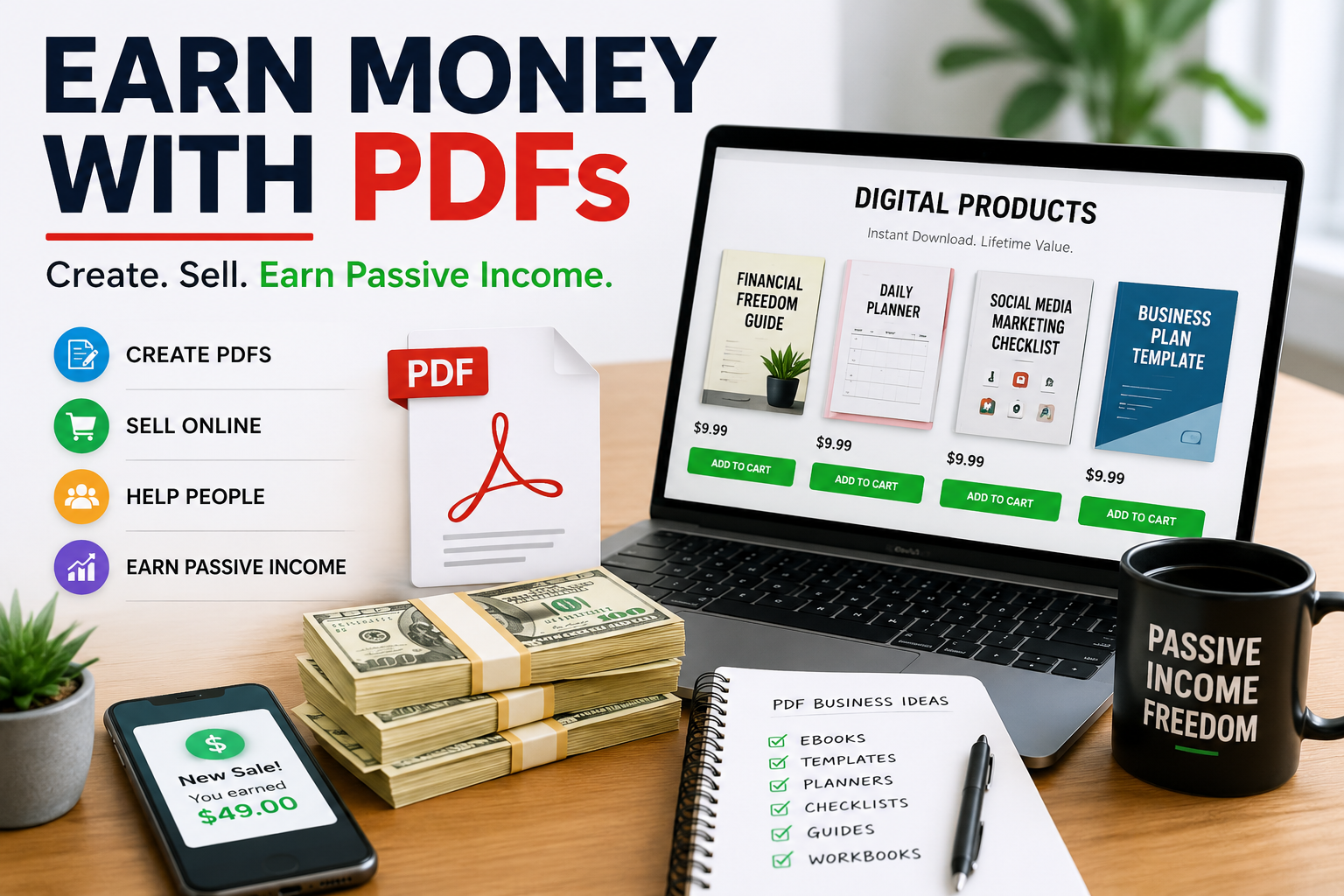
People often imagine passive income.
That phrase has probably sold more courses than any other concept in digital business.
The reality is messier.
Successful PDF businesses require updates.
Product improvements.
Changing regulations.
New technologies.
Passive income sounds attractive until customers start asking questions at midnight.
That doesn't mean PDF businesses aren't worthwhile.
They absolutely can be.
It simply means the business doesn't stop once the file is uploaded.
The product may be digital.
The responsibility remains very real.
## Where This Market May Be Heading Next
I don't think PDFs are disappearing.
I've heard that prediction for years.
What I do think is changing is the standard buyers expect.
Static information alone won't be enough.
People increasingly want templates, worksheets, calculators, frameworks, implementation systems, and practical tools embedded into the experience.
A plain ebook may struggle.
A decision-making toolkit wrapped inside a PDF may thrive.
That's a subtle distinction.
Yet it changes everything.
The creators who understand that shift won't be competing against free information.
They'll be competing against confusion itself, and confusion remains one of the most profitable problems on the internet.