# The Next Generation of PDFs: How Documents Are Evolving Beyond Static Files
The meeting wasn't supposed to last more than thirty minutes.
A government contractor had submitted a proposal package worth several million dollars. Everything looked fine until someone opened the PDF. The document loaded slowly, embedded charts refused to render correctly on certain systems, and reviewers began passing around screenshots instead of using the actual file. By lunchtime, half the team was discussing the document through email attachments while the original PDF sat untouched.
I've seen variations of this situation more times than I can count.
For years, PDFs have been treated as the final destination of information. Once a report, contract, application, design, or proposal became a PDF, the assumption was that the content had reached its finished form. Stable. Portable. Unchangeable.
That assumption is starting to crack.
The uncomfortable reality is that modern work rarely happens in static environments anymore. Teams collaborate across devices, departments, countries, and software ecosystems that didn't even exist when the PDF format became dominant. What worked beautifully in a desktop-driven office often becomes surprisingly restrictive inside cloud-first workflows.
Most executives discover this too late.
A document might look perfect on screen, yet fail the moment multiple people need to interact with it simultaneously. That's where the story changes.
The conversation isn't really about PDFs anymore. It's about information mobility.
I've reviewed enough digital transformation projects to notice a pattern. Organizations don't wake up one morning and decide to replace traditional documents. The pressure usually comes from operational friction. Employees spend too much time downloading files. Customers abandon applications halfway through forms. Review cycles stretch from days into weeks because information is trapped inside static containers.
On paper, a PDF seems simple.
Reality tends to look different.
A modern insurance claim may contain photographs, signatures, geolocation records, supporting evidence, timestamps, workflow approvals, compliance checks, and AI-generated risk assessments. Compressing all of that into a static file starts feeling like forcing a streaming service onto a DVD.
That's where costs begin climbing.
What vendors rarely mention is that document management expenses often come from the processes surrounding the file rather than the file itself. Storage is cheap. Human coordination isn't.
One delayed approval can cost more than years of document hosting.
The irony is hard to ignore.
The PDF was originally celebrated because it preserved information exactly as intended. The next generation of documents is being developed because information often needs to change. </writing>
## When Documents Start Behaving Like Applications
Most people still imagine documents as pages.
That's becoming an outdated mental model.
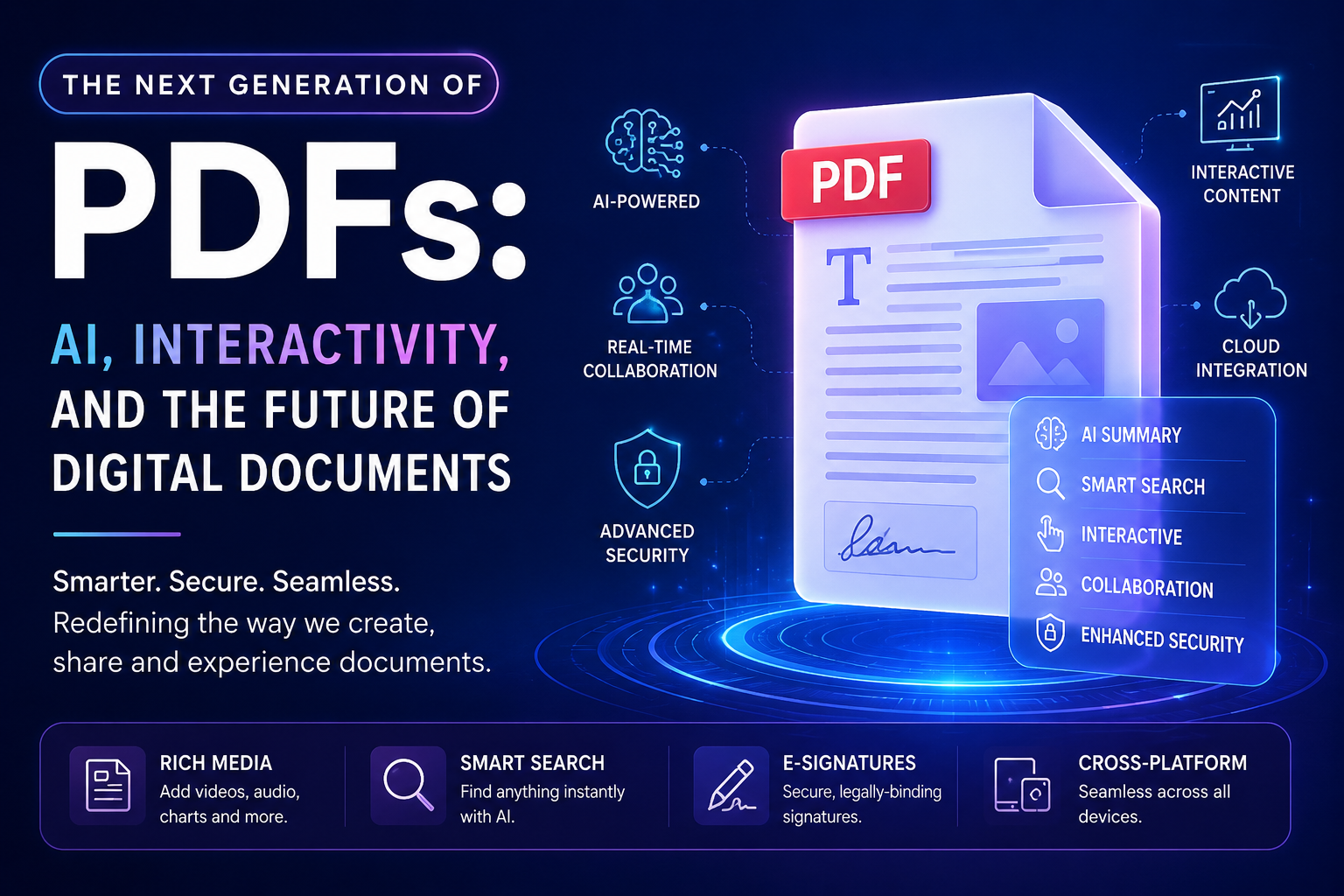
A growing number of document platforms now operate closer to lightweight applications than traditional files. Content can update automatically. Embedded data can synchronize with external systems. Forms can validate information before submission instead of rejecting users after the fact.
Sounds convenient.
It also creates entirely new challenges.
Procurement teams run into the same problem repeatedly. The more intelligent a document becomes, the less independent it becomes. Suddenly there are API dependencies, permission structures, integration requirements, security reviews, compliance audits, and uptime considerations.
What looks simple on paper often becomes expensive in practice.
I've watched organizations spend months selecting software because everyone focused on document features while ignoring integration complexity. Six months later, the real project wasn't document management at all. It was infrastructure coordination.
Users rarely see this side.
They open a document, complete a form, sign electronically, and move on.
Behind the scenes, dozens of systems may be exchanging information in real time.
This creates an incentive nobody talks about.
Software vendors increasingly want documents to become gateways into larger ecosystems. Once a document becomes connected to workflow automation, analytics, identity verification, cloud storage, collaboration tools, and AI services, switching platforms becomes much harder.
That's not necessarily bad.
But it explains why the document market is evolving so aggressively.
Another overlooked factor is AI.
Everyone talks about AI generating content. Far fewer people discuss how AI consumes documents.
Static PDFs were designed primarily for human readers. Modern document systems are increasingly being designed for both humans and machines. Metadata structures, semantic tagging, embedded context, and machine-readable relationships are becoming more valuable than visual formatting alone.
Honestly, that surprised me at first.
For decades, document quality was judged by appearance. Increasingly, it's judged by how effectively software can understand what's inside. </writing>
## The Quiet Shift Most Organizations Haven't Fully Noticed Yet
Walk into almost any office and you'll still find PDF files everywhere.
Contracts. Reports. Applications. Policies. Technical manuals.
The format isn't disappearing.
That's where many market predictions get the story wrong.
The future isn't PDF versus something else. The future is PDF plus layers of intelligence surrounding the document itself.
Think about online banking.
Most customers still download statements as PDFs. Yet the actual banking experience happens through connected systems, live data, verification services, analytics engines, and customer portals. The PDF has become one component inside a much larger information ecosystem.
The same transition is beginning to appear across healthcare, education, government services, legal operations, engineering documentation, and e-commerce.
A static file no longer carries the entire workload.
It acts as one touchpoint among many.
High-fidelity interfaces, tactile brutalist layouts, interactive product experiences, and layered digital environments are changing user expectations. People increasingly expect information to respond, update, verify, and interact. A completely static document can feel surprisingly disconnected from modern digital behavior.
Not everywhere.
Not yet.
But the direction is becoming difficult to ignore.
I've heard industry leaders describe documents as digital containers.
I think that's too simplistic.
Documents are increasingly becoming digital participants. They initiate workflows, trigger approvals, exchange information, verify identities, and communicate with surrounding systems.
That's a very different role from the PDF most people think about today.
The difficult question facing the industry isn't whether documents will become smarter.
It's how much complexity organizations are willing to accept in exchange for that intelligence, because every layer of convenience usually arrives carrying a hidden layer of dependency.